
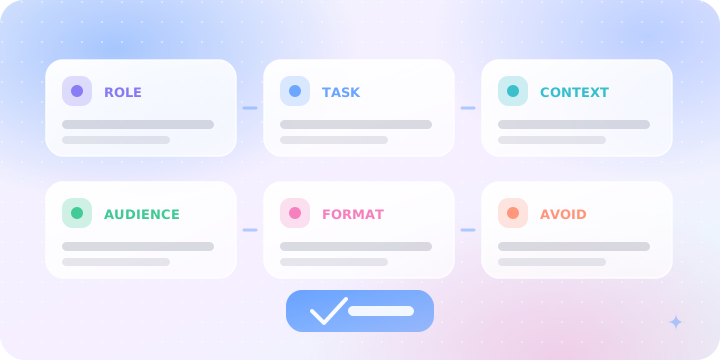
The simple prompt formula
Here is the easiest formula: Role + Task + Context + Audience + Format + Avoid. That's it. You don't need magic words — you need useful instructions.
Role
A designer, lawyer, teacher, and marketer explain the same thing differently. Tell the AI which hat to wear: “Act as a social media strategist.” Better role, better answer.
Examples: act as a UX designer · a YouTube SEO expert · a real estate copywriter · a presentation designer · a beginner-friendly teacher.
Task
The task is the actual output, not the idea. Bad: “AI for business.” Good: “Write a 500-word blog about how AI helps small businesses save time.” Make it clear enough that the AI knows what to deliver.
A — “Talk about websites.”
B — “Create a homepage structure for a corporate website.”
Show answer
B — it says exactly what to create.
Context
Context is the story behind the request: what is this for, why does it matter, what details should it consider. Example: “We are a Dubai real estate developer launching a new residential project for young professionals.” Without context, the AI fills the gaps — sometimes badly.
Audience
A prompt for investors differs from one for students; clients differ from your internal team. Ask “who will read or use this?” and say it in the prompt.
For investors: business value, opportunity, numbers, confidence. For clients: benefits, trust, clarity, easy language. For students: simple examples, step by step. For executives: short summaries and direct recommendations.
Format
Format is where people forget the magic. Do you want a table, a list, a script, a carousel, a slide-by-slide plan, or a website section? Say it — format turns messy answers into usable ones.
Avoid
The secret move: tell the AI what not to do. Avoid long paragraphs, fake numbers, complicated words, too much text, generic advice, emojis, sounding too salesy. Boundaries make the output cleaner.
“Make a company profile.”
“Act as a presentation designer. Create a 12-slide company profile for a luxury real estate developer in Dubai. The audience is investors and clients. Use a premium, confident tone. Include About Us, Mission, Projects, Services, Awards, and Contact. Keep text short and avoid fake numbers.”
Role, output, industry, audience, tone, sections, rules.
- A role for the AI?
- The exact output (task)?
- Context / background?
- The audience?
- A tone / style?
- The format?
- An avoid list?
Ready-to-copy prompt
Act as a [role].
Create a [specific output] for [audience].
Context: [background information].
Style: use a [tone/style] tone.
Format: structure the answer as [format].
Include: [what must be included].
Avoid: [what should not be included].
Act as a UX copywriter.
Create homepage content for a corporate website.
The company provides project management services in Dubai.
The audience is business owners, developers, and investors.
Use a professional, clear, and trustworthy tone.
Structure the answer by website sections: Hero, About, Services, Why Choose Us, Testimonials, Contact.
Avoid long paragraphs, fake numbers, and generic claims.
Final takeaway
A strong prompt isn't about sounding clever — it's about being useful. Give the AI the role, the task, the context, the format, and the rules, then watch the answer improve.