
-
 01
01Ambient Light
General illumination already present in a scene, without one visibly dominant source.
-
 02
02Natural Daylight
Sunlight and sky illumination used naturally, often creating believable color and shadows.
-
 03
03Window Light
Daylight entering through a window, creating a soft directional source indoors.
-
 04
04Studio Lighting
Controlled artificial illumination arranged specifically for predictable, repeatable photographic results.
-
 05
05On-Camera Flash
Flash attached near the lens axis, producing direct illumination and compact shadows.
-
 06
06Key Light
The main source establishing the subject's brightness, direction, and dominant shadow pattern.
-
 07
07Fill Light
Secondary illumination that reduces shadows created by the main source without replacing them.
-
 08
08Backlight
Light placed behind a subject, separating its outline from the background.
-
 09
09Rim Light
Narrow illumination tracing a subject's outer edge to improve separation and shape.
-
 10
10Three-Point Lighting
Classic setup combining key, fill, and back sources for balanced subject modeling.
-
 11
11Butterfly Lighting
Frontal light placed high above the face, forming a small nose shadow below.
-
 12
12Rembrandt Lighting
Angled portrait lighting producing a characteristic triangle of light on the shadowed cheek.
-
 13
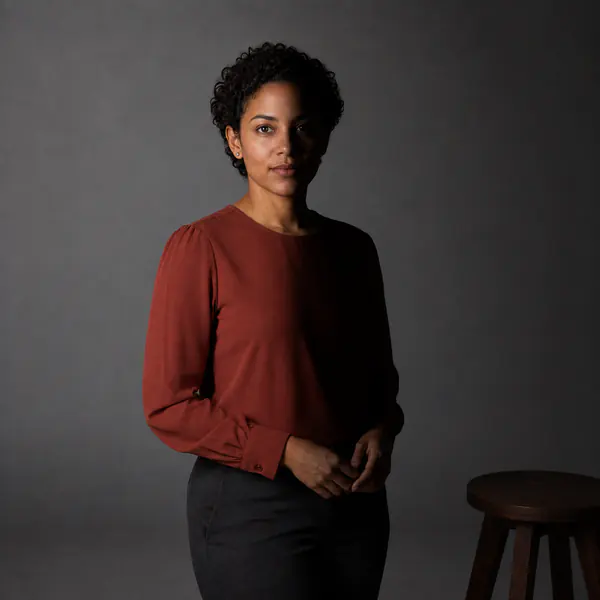
13Split Lighting
Side illumination dividing the face into bright and dark halves for drama.
-
 14
14Side Lighting
Illumination arriving from one side emphasizes volume, texture, and surface irregularities.
-
 15
15Top Lighting
A source directly above creates downward shadows and emphasizes upper-facing surfaces.
-
 16
16Hard Light
A small or distant source creates crisp shadows, bright highlights, and pronounced texture.
-
 17
17Soft Light
A large nearby source creates broad highlights and gradual, flattering shadow transitions.
-
 18
18Diffused Lighting
Light scattered through material or atmosphere creates softer edges and smoother tonal transitions.
-
 19
19High-Key Lighting
Bright, low-shadow illumination keeps most tones light, clean, and visually optimistic.
-
 20
20Low-Key Lighting
Predominantly dark illumination uses selective highlights and deep shadows for mystery or drama.
-
 21
21Golden-Hour Light
Low warm sunlight shortly after sunrise or before sunset creates long, flattering shadows.
-
 22
22Overcast Light
Cloud cover acts as a huge diffuser, producing soft shadows and restrained highlights.
-
 23
23Neon Light
Colored luminous tubes create saturated local illumination, reflections, and urban nighttime atmosphere.
-
 24
24Warm Lighting
Illumination biased toward amber, orange, or yellow tones creates comfort and intimacy.
-
 25
25Cool Lighting
Illumination biased toward blue or cyan tones suggests freshness, distance, or technology.
No keyword in this pack matches that search.